
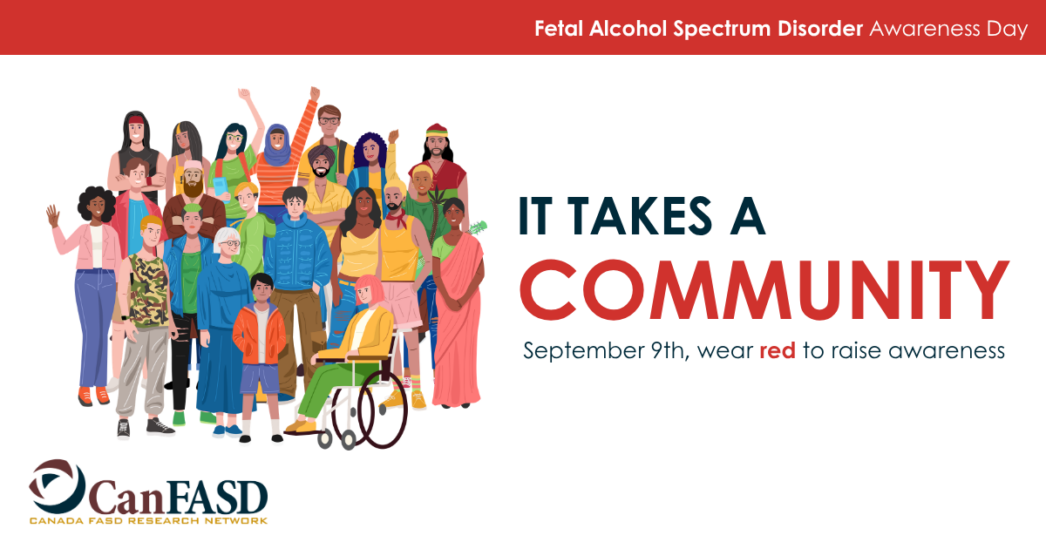
Today is FASD Awareness Day! As we recognize this important day, we’re taking a closer look at what it means to support people with fetal alcohol spectrum disorder (FASD) throughout their lives.
An intervention is a strategy we put in place to help meet a specific goal or to address a challenge. When we talk about services, support, and treatment for people with FASD, we are talking about interventions. People with FASD can benefit from a range of support and interventions throughout their lives. These supports can help improve health, relationships, learning, and more, contributing to someone’s overall wellbeing and quality of life, and improving their ability to consistently access their strengths. Interventions may change over time as an individual grows and changes and as their needs and strengths evolve.
Each person with FASD is unique; they have their own strengths needs and goals. The interventions that will be most effective are the ones that take into consideration each person’s personal pattern of strength and challenge. With the right supports, individuals with FASD can achieve positive, healthy outcomes in many areas of their lives.
Different kinds of interventions
People with FASD may need supports across multiple areas of life. The categories below reflect key areas where FASD interventions and services can make a difference, as outlined in the Towards Healthy Outcomes framework.
- Physical Wellbeing – including nutrition, physical activity, physical health, and experiences in healthcare
- Attachment and Relationships – including early life adversity, trauma, and relationship skills
- Social Competency – including aggression, sexual behaviour
- Mental Wellness – including mental health, suicidality, substance use, therapeutic approaches
- Education and Skill Building – including school supports, learning, and skills
- Identity – including stigma and stereotypes, disability representation, race, class, gender, and sexual orientation, human rights
- Interdependence – including daily living, service delivery and support, transition periods and more.
- Employment – including resources for employees, employers, and those supporting employment
- Housing – including resources for individuals with FASD, families, FASD service providers and housing providers
- Parenting with FASD – including resources for individuals with FASD, families, FASD service providers
If you’re interested in learning more about interventions, we encourage you to explore our newly updated webpage!
FASD Month 2026
Whether you’ve been part of the FASD community for years or are just learning about FASD, there’s a place for you this FASD Month. Here are a few ways you can get involved:
- Attend a local FASD Month event
- See a landmark light up red on September 9th
- Take an online FASD course
- Talk to your government representatives about FASD
- Share FASD information on social media
- Buy a print from an artist with FASD
Together, we can create a Canada where every person with FASD has the understanding and support they deserve!