
A diagnosis can help individuals and families understand strengths, challenges, and supports that can help them thrive. But how exactly is fetal alcohol spectrum disorder (FASD) diagnosed? An FASD diagnosis is a comprehensive, multidisciplinary process. Rather than relying on a single test, a diagnostic team looks at a person’s neurodevelopmental functioning and physical features. The team also considers the history of prenatal alcohol exposure (PAE), using nationally recognized diagnostic criteria.
The assessment process can look different depending on a person’s age and circumstances, but the goal is to build a clearer understanding of how PAE may have affected development and identify appropriate supports.
What is FASD?
FASD is a lifelong neurodevelopmental disability associated with prenatal alcohol exposure. It can affect areas of brain functioning such as learning, memory, attention, communication, executive functioning, motor skills, and adaptive functioning. FASD looks different from person to person. Some individuals may experience significant challenges in several areas, while others may have strengths in some areas alongside specific difficulties. Because there is no single test for FASD, diagnosis requires a comprehensive assessment.
How do professionals diagnose FASD?
In Canada, FASD diagnosis involves assessing three key areas: neurodevelopmental functioning, facial features, and prenatal alcohol exposure. A multidisciplinary team considers these areas together, alongside a person’s medical, developmental, social, and family history. One of the most important parts of an FASD assessment is understanding how a person’s brain is functioning across different areas. The assessment considers 10 neurodevelopmental domains, including areas such as motor skills, cognition, language, academic achievement, memory, attention, executive functioning, affect regulation, and adaptive functioning.
A person may meet the neurodevelopmental criteria for FASD when significant impairment is identified in three or more of these domains. The assessment also considers an individual’s strengths and abilities. Understanding what a person does well is just as important as identifying areas where they may need additional support.
Looking at facial features
A trained clinician may assess for three sentinel facial features associated with prenatal alcohol exposure: short palpebral fissures, a smooth philtrum, and a thin upper lip. These features are assessed using standardized methods and measurement tools. It is important to understand that most people with FASD do not have all three facial features. Having these features can provide important information during an assessment but not having them does not mean that someone cannot have FASD.
Understanding prenatal alcohol exposure
The assessment also considers whether there is enough information to confirm PAE. Information about alcohol exposure during pregnancy may come from a range of sources, including self-report, reports from reliable sources, birth or medical records, clinical observations, and social service records. A diagnosis does not depend on identifying a specific amount of alcohol consumed during pregnancy. There is no safe amount of alcohol during pregnancy, and the effects of prenatal alcohol exposure can vary considerably between individuals.
Who is involved in an FASD diagnosis?
FASD assessment is generally completed by a multidisciplinary team, rather than a single professional. The composition of the team can vary depending on the person’s age and individual needs. For infants, the team may include a paediatrician or physician alongside professionals who can assess physical and developmental functioning. Preschool-aged children may be assessed by a paediatrician or physician, occupational therapist, speech-language pathologist, and psychologist. For school-aged children, the team may include a paediatrician or physician with expertise in FASD, occupational therapist, speech-language pathologist, and psychologist. Adult assessments may involve a physician, psychologist, and professionals with expertise in language and neurodevelopmental assessment.
Other professionals and community supports can also play an important role, including social workers, mental health providers, cultural liaisons, Elders and Knowledge Keepers, peer mentors, and FASD workers. Most importantly, individuals being assessed and their families or caregivers should be active partners throughout the process.
There is currently no blood test, brain scan, or single psychological test that can diagnose FASD. Instead, different professionals contribute different pieces of information. Bringing these perspectives together allows the team to develop a more complete picture of the individual and their strengths and needs. The assessment may also consider other factors that can affect development and functioning, including other neurodevelopmental conditions, mental health, trauma and adverse experiences, sleep, sensory functioning, birth history, growth, congenital anomalies, and other medical or environmental factors. This broader assessment helps ensure that an individual’s experiences are understood within the context of their whole life.
When can someone be diagnosed for FASD?
A diagnosis is important at any age. Getting a diagnosis as an infant is possible, but can be more difficult. Experts recommend getting a diagnosis as soon as possible, as the earlier the understanding and supports are in place, the more the person’s challenges can be accounted for. More and more, people are also being diagnosed in adulthood, finding relief in better understanding themselves and a way forward in knowing where to find others that understand them, too.
Cultural safety matters in FASD diagnosis
FASD assessment should be grounded in cultural safety, respect, and partnership. Standardized assessment tools may have limitations when they are applied across different cultural and linguistic contexts. This is particularly important when assessments involve Indigenous communities and populations that have not been adequately represented in the development or validation of certain tools.
Culturally safe assessment means building relationships and working collaboratively with individuals, families, and communities. Elders, Knowledge Keepers, cultural liaisons, community workers, and others with cultural knowledge can play an important role in identification, assessment, and follow-up. Approaches such as Two-Eyed Seeing can help bring different ways of knowing together in assessment and care.
What happens after an FASD diagnosis?
An FASD diagnosis can be an important starting point for understanding what supports may be helpful. Following an assessment, the diagnostic team typically provides a report summarizing the findings and recommendations. These recommendations may help individuals, families, schools, healthcare providers, employers, and other systems understand how to provide effective support.
Some people and families describe receiving a diagnosis as a moment of clarity. Others may experience uncertainty about what comes next. That is why post-diagnostic support is an important part of the process. Families and individuals should have opportunities to discuss the results, ask questions, understand recommendations, and connect with appropriate services and supports.
Everyone Plays a Part
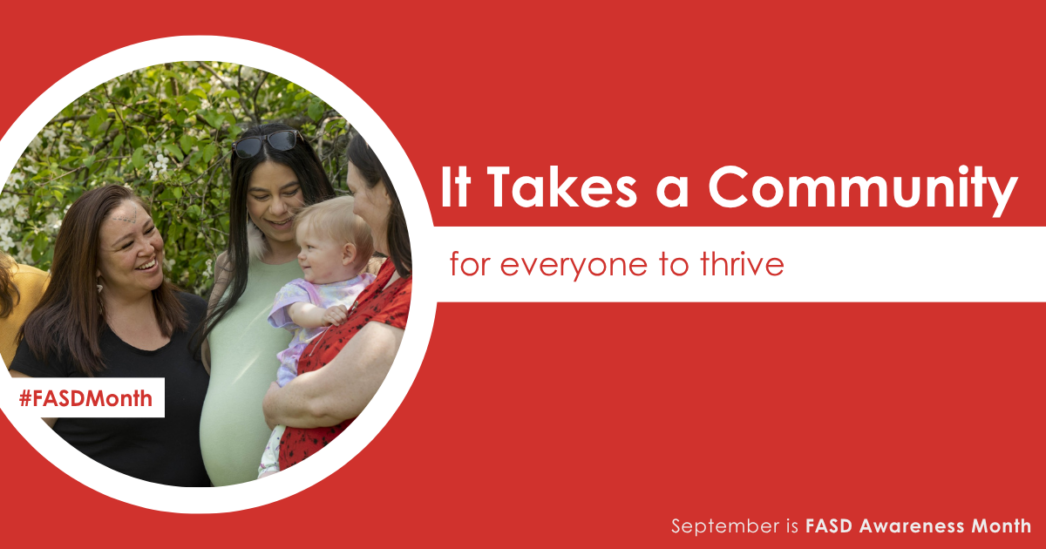
This month, communities across Canada and around the world come together to raise awareness about FASD and promote greater understanding and support. This year’s FASD Awareness Month theme is “Everyone Plays a Part: It Takes a Community.” The theme highlights an important message about FASD diagnosis and support: no one person or profession can do it alone. Creating communities where people with FASD and their families can thrive requires healthcare providers, educators, service providers, policymakers, families, individuals with living experience, and community members to work together.
Learning more about FASD and the diagnostic process is one way that everyone can play a part. When professionals are able to recognize FASD and understand the diagnosis and communities understand the experiences of people with FASD, we can move toward more informed, compassionate, and effective support.
Next steps
FASD diagnosis is a complex process, and there is much more to learn about identification, referral, assessment, and clinical guidance. To explore evidence-based information and practical resources, visit our Identification, Assessment and Diagnosis Hub. The hub brings together resources for clinicians, information about referral pathways, diagnostic guidance, and resources for individuals and families.
For professionals looking to strengthen their knowledge and skills, the Multidisciplinary Team Training for Diagnosis of FASD is designed to support professionals involved in the FASD diagnostic process.