
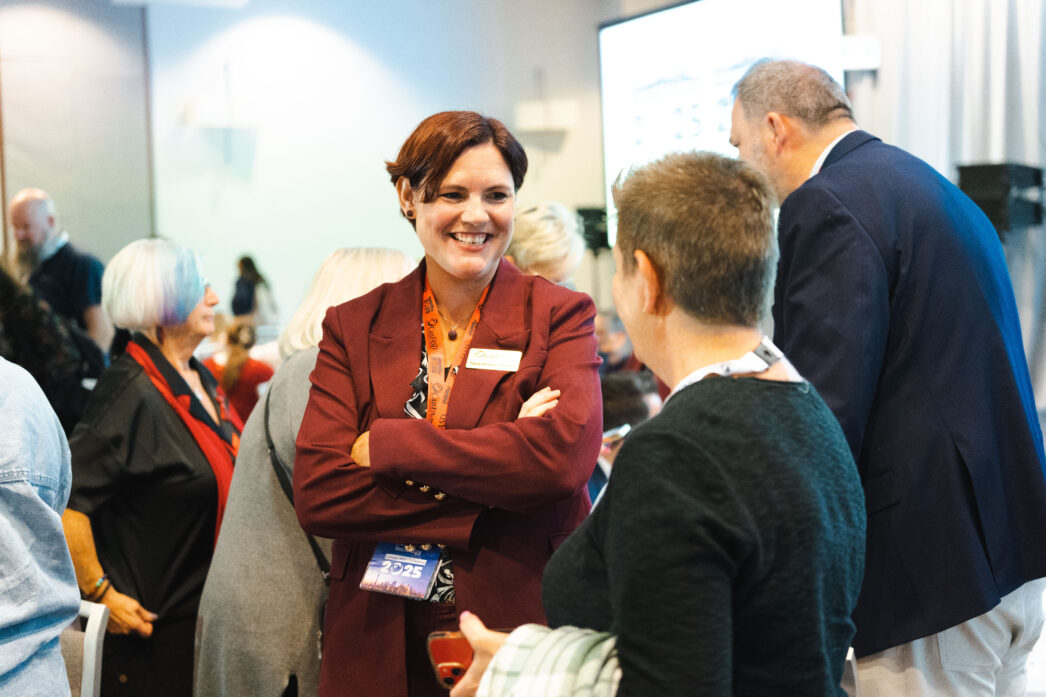
This blog was written by Melissa Dobson.
A diagnosis is not a stigma to be avoided. It is a key. Without it, my daughter spent over a decade struggling in classrooms that had no obligation to help her. With it, my son has specialized teachers, informed doctors, and a future built on strategies instead of guesswork. That contrast is the whole argument: the diagnosis doesn’t create the disadvantage — withholding it does.
My son: what a diagnosis makes possible
My son was diagnosed with FASD at four, after a pediatrician who’d been present at his birth recognized the signs and pushed for assessment. The testing itself was brutal — he became so dysregulated partway through that he ended up under the table, barking and acting like a dog. But the diagnosis that followed opened doors immediately: specialized school programming, an FASD-informed psychologist, FASD-informed pediatric care. It gave our whole family a new vocabulary — we stopped expecting him to change, and moved from looking for solutions and instead started building strategies. He is growing up surrounded by the right supports, and he has a future. That is what a timely diagnosis buys a child.
My daughter: what happens without a diagnosis
My daughter is patient, kind, an artist, a pianist — and our oldest, which meant every missed early milestone first registered as my failure as a parent, not as a sign of anything else. A preschool speech consultant was the first person to name a concrete speech delay; private therapists and a supported classroom followed. She improved but stayed delayed.
Then came the parts no parent should have to navigate, never mind having to do it repeatedly: overcrowded school districts, moving a home to get better student ratios, programming that aged her out for lack of a diagnosis, denying access to services, and a teacher who papered over her struggles with straight A’s and stickers instead of support. It took a private tutor, nightly homework battles, and years before an educational psychologist (by then she was in ten), who happened to have FASD expertise, initially flagged what was going on.
Even then, the diagnostic clinic hesitated: they called her “at risk” rather than diagnosed, citing her race and her “potential” as reasons a diagnosis might do her harm. Meanwhile the same evaluation documented significant impairment in cognition, academic achievement, and attention, while also telling me I was the one whose scores didn’t match theirs. She got a support statement to give to the schools, but never a diagnosis. We kept her file’s FASD note alive through sheer advocacy — a psychologist and speech-language pathologist fighting the school board on her behalf — but with no official diagnosis, and a child who was pleasant and hard-working, the system kept finding reasons to look away. A follow-up assessment went the same way with a lead clinician who had strong opinions about diagnosing due to race and a perception of lack of supports. Once again, I felt I was seen as overreacting and over-supporting by the assessment team, while I was actively creating an environment where she showed success where there might not have been if she had not had these extra supports.
She struggled, our family struggled. Looking back, I wonder, even though we approached my son from an FASD lens, if we should also have applied this lens with my daughter. But that wasn’t her diagnosis from the experts so I often second guessed my parenting skills. Would it have prevented her mental health issues, her severe depression in her teens, her inability to leave the house, or her fear of school? Maybe not, but we might have navigated and strategized differently had we had the confidence of a diagnosis to reflect on. We might have felt validated with our supports, started them earlier and engaged them pre-emptively rather than reactively.
In adulthood, she has finally received a full diagnosis “FASD, without sentinel facial features…[with] five domains significantly impaired” from a clinic that explained it to her clearly, connected her to supports and offered links to resources, and treated her with the dignity she’d been denied for over a decade. It was validating. It was also 15 years too late.
The need
Removing the FASD diagnosis doesn’t remove stigma, it removes access. A lack of a diagnosis would have kept my son out of the specialized program that shaped his upbringing, and it did very nearly keep my daughter out of some supports she eventually received or some she was flatly denied. Families without the resources, connections, and sheer persistence wouldn’t get a second or third assessment; they’d just get no answer, forever.
What FASD families need is not less diagnoses, it’s more, with more diagnostic capacity, more FASD-informed clinicians and teachers, more research, more prevention and more supports. Hopefully, in the future, the more people move into the diagnosed category, which can lead to more common ground, more success, and more hope.
Thank you to Melissa for sharing her experience with us. If Melissa’s experience feels familiar, there are resources available to help you learn more about FASD, find support, and navigate the diagnostic process. Our online hub offers information about FASD, diagnosis, supports, and services across Canada, as well as resources for caregivers and families. Our FASD Diagnostic Clinics in Canada directory can help families identify clinics and diagnostic services in their province or territory.
Melissa Dobson is a parent of three children, all adopted at birth, all prenatally exposed to alcohol and all amazing. She holds a PhD in biochemistry where she discovered genes involved in Vitamin B12 metabolism. From scientific bench work, she went on to expand her horizons as she realized she needed to shift her career so she could support her children while also pursing her career. For over a decade, she has ben an instructor at a polytechnic institute in a Bachelors of Technology in Management program. Combining her passions of teaching, learning and supporting families like hers, she is embarking on a life that blends these three roles. She has various student projects that help support children with disabilities, including those with FASD; she keeps learning and thinking and trying ways to redesign systems for supports; and she is involved in numerous organizations and committees to support children with neurodevelopmental delays. All these are efforts to try and shift the needle for children like hers to flourish.