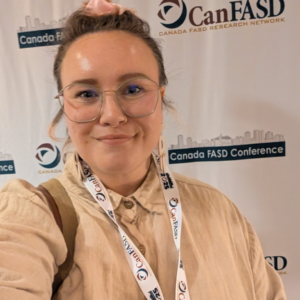
The voices that matter shouldn’t be missing from the conversation.
People who are impacted by FASD – those who have FASD, the caregivers that walk beside them, and those who give birth to them – deserve to be in the rooms where decisions are made.
Living experience voices in research
Every year, research conferences, policy discussions, and national conversations about FASD take place across Canada and internationally. And every year, the people most affected are often not there. Not because they don’t care. Not because they aren’t experts. But because they cannot afford to attend.
Travel. Accommodation. Registration. Support needs. These costs quietly keep lived experience out of the spaces where it is needed most.
But research is better when it we listen to those impacted. At every stage of research – from development of the research question, to conducting the study, to sharing the results – the experiences of people whose lives are directly impacted give important insight and nuance to research.
We need the voices of those with lived experience in these discussions about research, policy, and practice. Lack of financial support shouldn’t be a barrier to their participation.
About the LELF Fund
The Lived Experience Leadership Fund (LELF) Fund is a donation-based fund removes the barriers to living experience participation in research. People with FASD; parents and caregivers of someone with FASD; and someone who identifies as having drank during their pregnancy are eligible to apply.
Successful applicants are given funds to offset the costs needed to participate in an approved research activity, such as an FASD-related research meeting, conference, or event. The fund may be used to cover:
- Travel and accommodation
- Conference registration
- Accessibility and support costs
Thanks to our generous donors, people with living experience can participate in research as contributors, not observers. Click here for more information and how to apply.
Living experience stories
Thanks to donors like you, we’ve so far supported six people with living experience to bring their voices to larger conversations about FASD research, practice, and policy.
These individuals are leaders, storytellers, researchers, and advocates for change. Read on to hear about some of their stories.
Reinier’s story
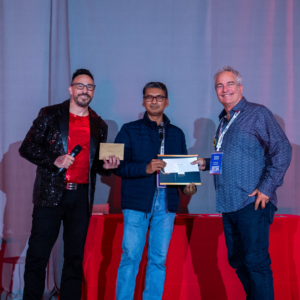
Reinier traveled all the way from Nova Scotia to take part in the 2025 Canada FASD Conference. Alongside Dr. Valerie Temple, he co-presented on the critical topic of aging and FASD. The conference also celebrated Reinier’s creative achievements – his film, An Update from the Man: A Decade on with FASD, earned Third Runner Up at the Film Festival. Reflecting on the event, Reinier shared his favorite moments: “I absolutely LOVED any of the sessions that involved our Lived Experience young adults! The one session where the front of the room was FULL of these folk – I was almost in tears.”
Dorothy’s story
Dorothy journeyed from Alberta to the 2025 Canada FASD Conference, bringing her lived experience and expertise from the Integrated Mental Health Partnerships for Advancing Care and Treatment study. During the study, she helped shape research goals, co-develop the project, and provide essential feedback. The conference gave her the platform to share her insights and experiences with a wider audience. Her poem, “Invited to the Table,” captures the profound moment of finally having a voice in spaces historically reserved for professionals: “At last, there was a seat for me… Thank you for letting me have a seat.”
Chris’s story
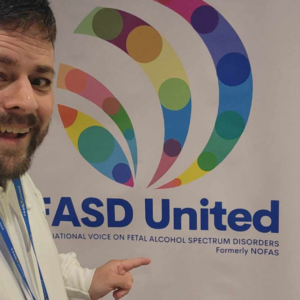
As the Coordinator of Manitoba’s Visions and Voices program and a Board Member of the Manitoba FASD Coalition, the FASD United conference in Seattle offered an incredible opportunity to learn, connect, and amplify the conversation around FASD. He was especially inspired by presentations exploring memory, justice, education, and FASD initiatives happening around the world – topics that directly impact individuals, families, and communities every day. Reflecting on his experience, Chris shared, “It was fantastic! I’m so grateful to have this opportunity. Thank you so much to everyone who donated and helped me attend.”
Shannon’s story
As a Peer Support Worker and trauma-informed wellness facilitator in Ontario, Shannon brought her lived and professional experience to the Canada FASD Conference. She has experience with the ConnectWell Mental Health Peer Support Project, the Health Nexus Advisory Board and contributing to the Canadian Academy of Health Sciences FASD Evaluation Board. Reflecting on the conference, she shared: “I learned new ways people are approaching support, advocacy, and systems change across Canada. Hearing from others helped me feel less alone and more confident in my own work. It strengthened my commitment to advocacy that is practical, compassionate, and rooted in real-life needs.”